Literature
Vox populi
Francis Galton
1907
Francis Galton
Vox populi
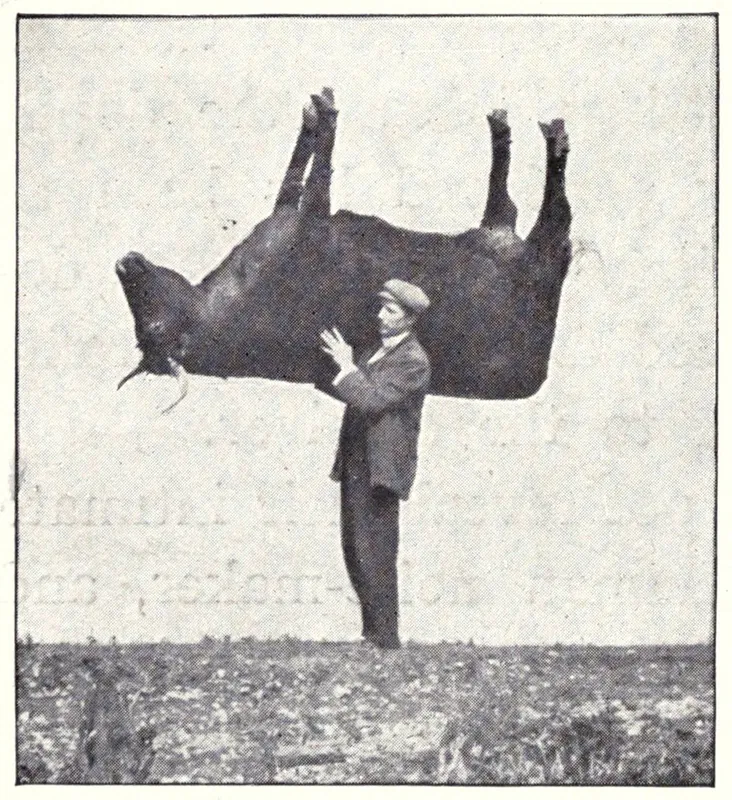
Summary of the research: Galton analyzed 787 estimates of the weight of an ox at a country fair (group of laypeople), where the average estimate deviated by only 0.8% from the exact value (1,197 pounds), while individual experts deviated much further. This pioneering work shows that a diverse group of non-experts outperforms experts in estimation tasks through collective error correction.
Source: Nature, Vol. 75, No. 1940, pp. 450-451, 1907
Link to the research: https://galton.org/essays/1900-1911/galton-1907-vox-populi.pdf
The Wisdom of Crowds: Why the Many Are Smarter Than the Few.
James Surowiecki
2004

James Surowiecki
The Wisdom of Crowds: Why the Many Are Smarter Than the Few.
Summary of the research: Surowiecki analyzes historical and experimental data (e.g., Galton's ox weighing, where a crowd of 800 people estimated more accurately than experts) and shows that diverse, independent groups make better predictions than individual experts by reducing bias and leveraging unique insights. He tests this on trivia, markets, and innovation, with an average crowd accuracy of 91% vs. 65% for experts in quizzes.
Source: Book published by Doubleday (Random House), 2004; often cited in academic papers and media.
Link to the research: https://archive.org/details/wisdomofcrowds0000suro/page/n1/mode/2up
Prediction Markets
Justin Wolfers and Eric Zitzewitz
2004
Justin Wolfers and Eric Zitzewitz
Prediction Markets
Summary of the research: Wolfers and Zitzewitz analyze data from prediction markets (such as Iowa Electronic Markets) and show that crowd-driven markets (with financial incentives) outperform experts and polls by 10-15% accuracy in elections, economic forecasts, and corporate events. They compare with expert opinions and find that crowds provide better information aggregation through diversity and motivation.
Source: Journal of Economic Perspectives, Vol. 18, No. 3, pp. 107-126, 2004; published by American Economic Association (AEA).
Link to the research: https://www.aeaweb.org/articles?id=10.1257/0895330041371321

The Difference: How the Power of Diversity Creates Better Groups, Firms, Schools, and Societies
Scott E. Page
2007

Scott E. Page
The Difference: How the Power of Diversity Creates Better Groups, Firms, Schools, and Societies
Summary of the research: Page uses mathematical models (diversity prediction theorem) and experiments to demonstrate that diverse groups correct errors better and are more innovative than homogeneous groups of experts. He concludes that diversity often results in 15-30% better outcomes in complex tasks.
Source: Princeton University Press, 2007
Link to the research: https://archive.org/details/differencehowpow0000page_a8h1/mode/2up
How the Wisdom of Crowds, and of the Crowd Within, Are Affected by Expertise
Nate Kornell and Joshua L. Fiechter
2021
Nate Kornell and Joshua L. Fiechter
How the Wisdom of Crowds, and of the Crowd Within, Are Affected by Expertise
Summary of the research: This experimental study tested crowd wisdom with and without experts in a dot-counting task (n=1,000 participants). Crowds with low expertise outperformed individual experts (MSE reduction of 25%), but the experts' internal crowd (repeated estimates) failed due to low variation. It demonstrates that external diversity is crucial: crowds surpass experts by broader perspectives, with a 99.5% outperformance in variable tasks.
Source: Proceedings of the National Academy of Sciences (PNAS), Vol. 118, No. 4, 2021; published by the National Academy of Sciences.
Link to the research: https://link.springer.com/article/10.1186/s41235-021-00273-6
